by
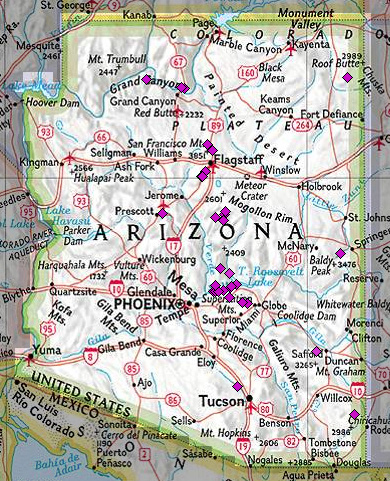
The purple diamonds are trailheads where some good hikes begin.
- where and when
- Choose seasonal hikes. South Mountain in July wouldn’t be the best idea, nor would Flagstaff in January.
- details
- Find out as much as you can. Guidebooks, Hike Arizona, Outdoor Links, and the AZHC are good sources.
- write-up
- See the announcements in the club calendar for what information to include.
- Many hikes have options in which the hiker can make it longer or shorter, depending on the route. If your hike has options, mention them in the write-up. Think ahead about appointing a deputy leader for the option you won’t be leading.
- driving directions
- Provide directions and a map for drivers to find the trailhead.
- backpack
- Arrange to get the club backpack from the previous leader.
- signup list
- Keep a record of everyone who contacts you about a hike. Personally I use an Excel spreadsheet, but paper is fine. Those who sign up by email should receive a reply from you confirming when and where to meet, your cell phone number, etc.
- screening
- Inexact, but necessary. Unless it’s really easy, you need to verify that everyone who signs up is capable of completing the hike. If someone asks you questions related to their equipment or personal fitness, discuss the subject in detail and make sure they are fit and prepared before signing up.
- If you believe that someone could not finish the hike, it is much better to disqualify one person than to put the other hikers at risk and ruin their enjoyment.
- toenails
- Trim and file your toenails! Otherwise they will hurt on a long downhill.
- equipment
- Make sure everything is there and in working order. Test the batteries. Test the operation of the 2-way radios. Try channel 4, code 0.
- weather
- Check the forecast where you are going.
- club backpack
- If the club backpack needs Trip Release Forms or Membership Applications, download and print them. If there aren’t enough batteries, buy batteries and give the receipt to the Treasurer for reimbursement.
- weather
- If you have to cancel the hike, notify everyone before noon. Also notify the Webmaster.
- Otherwise send the participants a reassuring email, giving them the weather forecast and any other information that will be helpful on the hike.
- water
- Put a jug of purified water in the refrigerator. On hot days I also carry an insulated jug of ice water in my car for after the hike.
- maps
- Look at the hiking map, unless you have every step memorized. Stow the hiking map, camera, and GPS in your backpack.
- sign in
- Have everyone sign in on the
Trip Release Form.
As they do, check them off your list.
In general you won’t know who the actual participants are until they arrive. - finances
- Put all contributions in the bag in the club notebook.
- shoe and water check
- Before a tough hike, make sure everybody has suitable footwear and is carrying enough water. Don’t wait until you arrive at the trailhead!
- car pooling
- Decide who’s driving and who will ride with each driver. If your hike has options, hikers who choose the same option should ride together. Also, people who choose the same lunch option should ride together.
- directions
- Hand out written directions to all drivers, and if possible, a map. Include your cell phone number. Use 2-way radios if you are driving where there isn’t cell phone service.
- 2-way radios
- Both here and at the trailhead, mark the Trip Release Form to indicate which hikers receive radios.
- time
- When it’s time to leave, leave.
- directions
- If the trailhead is hard to find, set the time and place for a rendezvous so you can drive in caravan the last few miles.
- sign in
- Carry the Trip Release Form with you, for emergency contact information.
- togetherness
- You will always have fast hikers surging ahead and slow hikers lagging behind. Tell everybody where to re-convene, and make sure they all get together before going on. Where the hike is off-trail or there are confusing side trails, everyone will have to walk with you.
- deputy leader
- If it becomes necessary to split the group, appoint a deputy leader who knows the way.
- no one lost
- Unless people choose to leave the group and are dismissed, or you choose to split the group and appoint a deputy leader, you must know the whereabouts of all your hikers and be able to contact them.
- communications
- Carry a coach’s whistle. Use 2-way radios and cell phones when needed.
- radios
- Make sure all the 2-way radios are returned to the club backpack. Your Trip Release Form should indicate which hikers received radios.
- dry clothes
- It’s best to keep a complete change of clothes in your car. You never know. When the hike is a long way from home, changing into clean, dry clothes improves the drive back. At least have a pair of comfortable shoes and dry socks to put on.
- backpack
- Arrange to give the club backpack to the next leader.
- finances
- Take the cash. Contact the about electronic payment. If you can’t pay electronically, write a check for the amount contributed and mail it to the Treasurer, along with any new membership applications and a note identifying any membership renewals.
- trip report
- Write one. It doesn’t have to be great literature, but a trip report helps the club and provides encouragement and valuable information for others who want to do the same hike. See Author Guidelines.
- record keeping
- Before turning in the Trip Release Form, make a copy of it. The information might help you contact someone later on.
| extra: One-Way and Key-Exchange Hikes |